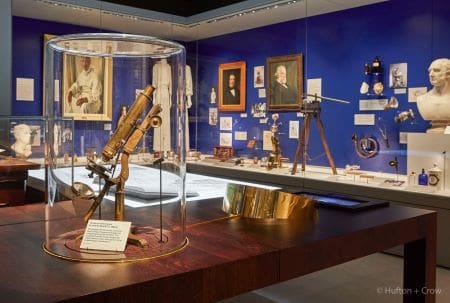
It is recommended the students are aged 14 and over for the workshops and the accompanying visit to the museum.
Health and Medicine in Britain Workshop
Learning outcomes
- Understand the evolution of medical practices from the Medieval period to modern times.
- Engage with historical medical objects and techniques to gain a deeper appreciation for the history of medicine.
- Explore the contributions of key figures and innovations in medical history.
- Learn about the importance of technology in modern medicine.
- Learn about surgery, patients’ experience and ethics.
This workshop is for GCSE students studying ‘Health and the People’ from the AQA and ‘Medicine in Britain’ Edexcel curricula.
Curriculum links
AQA
- Medieval Medicine: Approaches including natural, supernatural, ideas of Hippocratic and Galenic methods and treatments; the medieval doctor; training, beliefs about cause of illness.
- The impact of the Renaissance on Britain: Challenge to medical authority in anatomy, physiology and surgery; the work of Vesalius, Pare, William Harvey; opposition to change
- Dealing with Disease: Traditional and new methods of treatments; quackery; methods of treating disease; plague; the growth of hospitals; changes to the training and status of surgeons and physicians; the work of John Hunter
- Prevention of disease: inoculation; Edward Jenner, vaccination and opposition to change.
- A revolution in surgery: Anaesthetics, including Simpson and chloroform; antiseptics, including Lister and carbolic acid; surgical procedures; aseptic surgery
- The development of Germ Theory and its impact on the treatment of disease in Britain: The importance of Pasteur, Robert Koch, and microbe hunting. Pasteur and vaccination; Paul Ehrlich and magic bullets; everyday medical treatments and remedies
- The impact of war and technology on surgery: Plastic surgery; blood transfusions; X-rays; transplant surgery; modern surgical methods, including lasers, radiation therapy and keyhole surgery
Edexcel
- Ideas about the cause of disease and illness – Rational explanations: The Theory of the Four Humours and the miasma theory; the continuing influence in England of Hippocrates and Galen
- Approaches to prevention and treatment – the extent of change in care and treatment: Improvements in medical training and the influence in England of the work of Vesalius
- Case studies – Key individual: William Harvey and the discovery of the circulation of the blood
- Ideas about the cause of disease and illness – Continuity and change in explanations of the causes of disease and illness: The influence in Britain of Pasteur’s germ Theory and Koch’s work on microbes
- Approaches to prevention and treatment – the extent of change in care and treatment: Improvements in hospital care and the influence of Nightingale. The impact of anaesthetics and antiseptics on surgery
- The significance of the Western Front for experiments in surgery and medicine: new technologies in the treatment of wounds and infection, the Thomas splint, the use of mobile X-ray units, the creation of a blood bank for the Battle of Cambrai
- Approaches to prevention and treatment – the extent of change in care and treatment: The impact of the NHS and science and technology: improved access to care; advances in medicines, including magic bullets and antibiotics; high-tech medical and surgical treatment in hospitals
Mary Shelley Frankenstein Workshop
Suitable for GCSE and A-Level English Literature and Performing Arts, Theatre and Stage Production students.
Curriculum links
Edexcel and AQA GCSE:
Literal and inferential Comprehension
2.1 understand a word, phrase, sentence or whole text in context; explore aspects of plot, characterisation, events and settings; distinguish between what is stated explicitly and what is implied; explain motivation, sequence of events, and the relationship between actions or events
Critical reading
2.2 identify the theme and distinguish between themes; support a point of view by referring to evidence in the text; recognise the possibility of and evaluate different responses to a text, use understanding of writer’s social, historical and cultural contexts to inform evaluation; make an informed personal response that derives from analysis and evaluation of the text
Assessment Objectives:
- AO3: Show understanding of the relationships between texts and the contexts in which they were written.
There are different kinds, or categories, of context which affect authors’ work and the reader’s response to it. Teaching should include:
- the author’s own life and individual situation, including the place and time of writing, only where these relate to the text
- the historical setting, time and location of the text
- social and cultural contexts (e.g., attitudes in society; expectations of different cultural groups)
- the literary context of the text, for example, literary movements or genres
- the way in which texts are received and engaged with by different audiences, at different times (for example, how a text may be read differently in the twenty-first century from when it was written).
Edexcel A-Level
Learning outcomes – students are required to:
- show knowledge and understanding of the contexts in which texts have been produced and received and understanding of how these contexts influence meaning
- identify and explore how attitudes and values are expressed in texts
- communicate fluently, accurately and effectively their knowledge, understanding and evaluation of texts
AQA A-Level
Texts across time: students write a comparative critical study of two texts on a theme of their choice.
Possible themes include, but are not limited to:
- representations of race and ethnicity
- representations of social class and culture
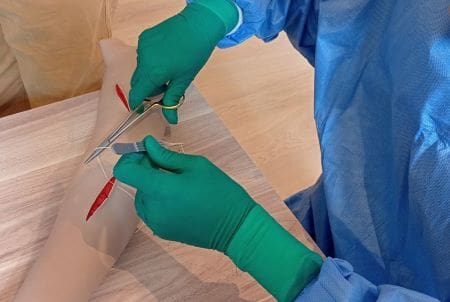
Surgical Skills Taster Workshop
This workshop is designed for GCSE, A-level, T-level and BTEC students who wish to get practical experience and learn more about surgical skills.
Objective: To introduce students to basic surgical skills and provide an overview of careers in surgery and the wider surgical team
The session will give the students an opportunity to speak to surgeons and find out more about medicine and surgery as a career.